This guide follows DAFF’s step-by-step guide for dogs from Group 3 countries, the most common route for families moving to Australia. It is a summary to help you plan. Your import permit lists the exact conditions, and DAFF’s guide is the authority.
6+ months
Allow at least
DAFF
0.5 IU/ml
RNATT pass mark
FAVN or RFFIT test
5 days
Health certificate
Endorsed within 5 days of export
Before you start
- Use an agent? DAFF encourages using an experienced pet transport agent. See choosing an agent.
- Check the breed. Some breeds and wolf hybrids are banned under customs and environment laws. See banned breeds.
- Check health. Dogs must not be under quarantine restrictions, more than 30 days pregnant or nursing puppies at export. DAFF advises against moving sick or very old dogs.
- Contact the competent authority. The government veterinary service in your country confirms which vets and laboratories are approved, and provides the country-specific forms.
Step 1: microchip
Your dog needs an ISO-compliant microchip, usually 10 or 15 digits. DAFF does not accept chips starting with 999 because they aren’t unique. The approved vet must scan the chip at every visit and before every blood sample, and record it accurately on every document. DAFF won’t accept documents with corrected microchip numbers, and if the chip can’t be read on arrival your dog cannot be imported. If your dog has two compliant chips, both numbers must appear on everything.
Step 2: identity check (optional, recommended)
An official government vet can verify your dog’s identity using the microchip. This must happen before the RNATT blood sample, not at the same visit, and at least 180 days before export. It reduces minimum quarantine from 30 days to 10. A pet passport or vaccination card is not accepted instead.
Step 3: rabies vaccination
The vaccine must be approved in your country, given when your dog was at least 84 days old, and kept valid continuously from the RNATT to export. Three-year vaccines are acceptable if given according to the manufacturer’s instructions. If the vaccination lapses, you must revaccinate, retest and restart the 180-day wait. For a first vaccination, wait 3 to 4 weeks before the RNATT.
Step 4: RNATT and the 180-day wait
The rabies neutralising antibody titre test shows your dog has responded to the vaccine. The sample must be taken by an approved vet between 12 months and 180 days before export, and tested by FAVN or RFFIT. A result of 0.5 IU/ml or more is needed. Your dog can’t be exported until at least 180 days after the sample arrives at the laboratory, with no exceptions. Then get the RNATT declaration from an official government vet. See our RNATT guide.
Step 5: import permit
Apply in BICON with the RNATT lab report and declaration, and pay in full. DAFF says most permits are issued in 20 to 40 business days, some take up to 123, and a permit isn’t guaranteed. The permit is valid until the RNATT expires, 12 months after the sample date.
Step 6: book quarantine and flights
After the permit is issued, book Mickleham and plan travel. Your dog must fly as manifested cargo in an IATA-approved crate directly to Melbourne. Dogs may transit (stay on the plane) anywhere, but may only tranship (change planes) in approved countries, under supervision. See flying your pet.
Step 7: final vet steps
DAFF lists these, all done by an approved vet and timed from the export date:
- Leptospira Canicola: vaccinated (booster between 12 months and 14 days before export) or a negative MAT test within 45 days.
- Canine influenza: dogs from the USA and South Korea must be vaccinated (course finished at least 14 days before export). Dogs from Canada need vaccination or isolation and testing.
- Brucella canis: a negative test within 45 days for dogs that aren’t desexed, using an accepted test type.
- Leishmania infantum: a negative IFAT or ELISA within 45 days. Rapid or snap tests are not accepted.
- External parasites: start at least 30 days before export and keep protection going.
- Internal parasites: two treatments within 45 days, at least 14 days apart, the second within 5 days of export.
- Africa: dogs that have ever been to mainland Africa need an imidocarb treatment within 28 days of export.
DAFF also recommends (but doesn’t require) vaccines for distemper, hepatitis, parvovirus, parainfluenza and Bordetella.
Step 8: final check and paperwork
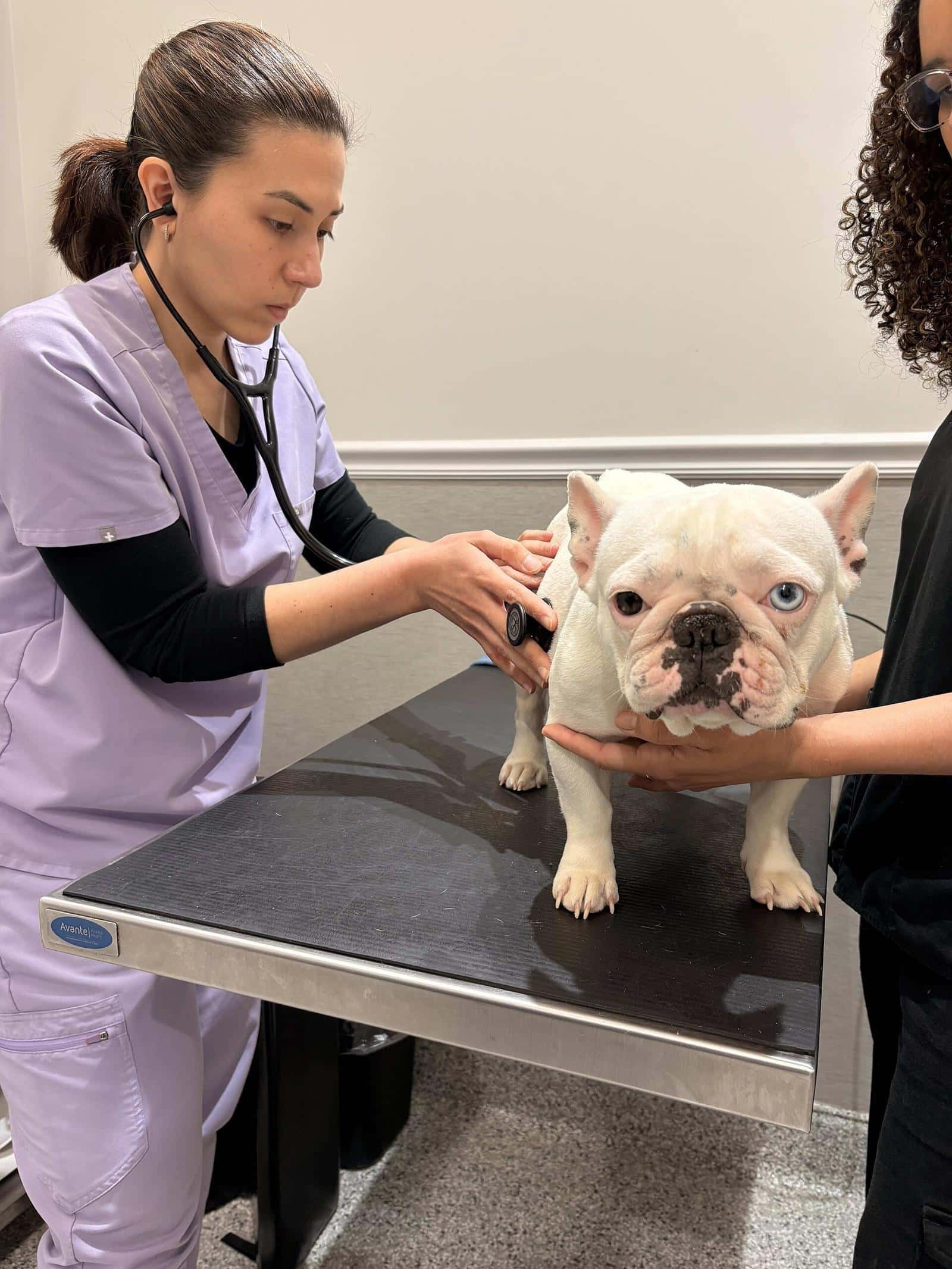
Within 5 days of export, your dog has a final clinical exam, the approved vet completes the health certificate, and an official government vet endorses it and stamps each lab report. The original certificate, with wet-ink stamps, must travel with your dog.
Group 3 dog checklist
0 of 9 done
Ticks are saved in this browser only.
Arrival
DAFF collects your dog at Melbourne Airport and takes it to Mickleham, emails you within 24 hours, and releases your dog after the minimum period if all is in order. See Mickleham.
Plan it
Put dates on every step with our timeline planner.
Frequently asked questions
Is the UK a Group 3 country for pet import to Australia?
Yes. The United Kingdom of Great Britain and Northern Ireland is on DAFF’s Group 3 list, as are Ireland, the USA (excluding Guam and Hawaii), Canada and most EU countries.
How long will my dog be in quarantine?
A minimum of 30 days, or a minimum of 10 days if an official government vet verified your dog’s identity before the RNATT blood sample. Problems can extend the stay.
Does my dog need to be desexed?
No, but entire (not desexed) dogs need a negative Brucella canis test within 45 days of export.
Which tests are needed in the final weeks?
For Group 3 dogs, DAFF requires a Leishmania infantum test within 45 days, a Brucella canis test for entire dogs, and either Leptospira Canicola vaccination or a negative test, plus parasite treatments and a final vet check.
Sources and further reading
Facts on this page were checked against these primary and official sources. Conditions change — confirm before you travel or buy.
- How to bring your dog to Australia from a Group 3 country — Department of Agriculture, Fisheries and Forestry (DAFF)
- Rabies vaccination and tests for cats and dogs coming to Australia — DAFF
- Import permits for cats and dogs coming to Australia — DAFF